

Light Deprivation Greenhouse
A light deprivation greenhouse, also known as a dark house or blackout greenhouse, is a specialized agricultural structure engineered to manipulate the photoperiod, or duration of daylight, experienced by plants growing inside. This control is achieved through the use of opaque materials or mechanical systems that block sunlight for a set period, simulating the shorter days of late summer or autumn. By doing so, the greenhouse influences the flowering or vegetative growth cycles of plants, which can be critical for commercial cultivation, particularly in regions with long growing seasons where plants might not flower naturally without this artificial intervention.a light deprivation greenhouse is an advanced agricultural tool that provides growers with the ability to control the photoperiod, enabling them to optimize plant growth and harvest schedules according to market demands and climatic conditions.
Natural Sunlight
Sunlight provides the energy that plants need to thrive, and natural sunlight is the best option for your crops. Natural sunlight provides light across a full spectrum of colors. Using a light deprivation technique, you can optimize the natural sunlight of outdoor growing and ensure your plants absorb the light that benefits them the most.
Growing Versatility
One of the biggest benefits of light deprivation is the versatility to provide the right light to a multitude of plants and crops in one single environment. If a mature plant needs a specific amount of sunlight to sustain its high-quality appearance, growers have the ability to provide that. In that same environment, if flowering plants need a little more attention to prevent any illness, growers can slow down production by providing less light to nurture those crops.
Increased Harvests
Light deprivation greenhouse growing gives growers nearly complete control of the growth and health of their crops. This technique gives you control of the “seasons” your plants are exposed to.
Year-Round Growing
In traditional outdoor growing techniques, there are many weather condition limitations. As a result, your plants may only thrive in certain seasons. Light deprivation techniques give you the ability to grow year-round regardless of the weather outside. You can do this by applying artificial light when natural light runs out and keep your crops growing even in the dead of winter. As a result, harvests are more plentiful, more frequent, and yield continuous income for your business.
Eco-Friendly
One of the top benefits growers love about using this system is the ability to produce premium organic crops in the most eco-friendly way. Instead of depending on artificial lighting, light deprivation greenhouses can help you easily achieve high-quality crops naturally. Using roll-up sidewalls and ceiling vents, you control the light needed to achieve the most ideal growth for your plants. This technique also leaves no negative impact on the environment and helps positively support earth and nature.
-
![Commercial Light Deprivation Greenhouse]()
Commercial Light Deprivation Greenhouse
The Commercial Light Deprivation Greenhouse is a high-performance solution designed forAdd to Inquiry -
![Blackout Light Greenhouse]()
Blackout Light Greenhouse
The Full Blackout Light Deprivation Greenhouse is an advanced greenhouse structure designedAdd to Inquiry -
![Hemp All Blackout Greenhouse]()
Hemp All Blackout Greenhouse
The Hemp All Blackout Greenhouse is a specialized cultivation solution designed for light-sensitiveAdd to Inquiry -
![Auto Blackout Greenhouse]()
Auto Blackout Greenhouse
Auto Blackout Greenhouse :Auto Blackout Greenhouse - Revolutionizing Hemp FarmingAuto BlackoutAdd to Inquiry -
![Greenhouse Blackout System]()
Greenhouse Blackout System
Greenhouse with blackout system, also known as all blackout greenhouse or light deprivationAdd to Inquiry -
![Blackout Greenhouse]()
Blackout Greenhouse
The Blackout Greenhouse is a highly specialized structure designed to provide precise control overAdd to Inquiry -
![Mushroom Greenhouse]()
Mushroom Greenhouse
The Full Blackout Mushroom Greenhouse is an advanced greenhouse structure specifically designed forAdd to Inquiry -
![Automated Greenhouse Blackout Systems]()
Automated Greenhouse Blackout Systems
Our Automated Greenhouse Blackout Systems provide a seamless and highly efficient solution forAdd to Inquiry -
![Greenhouse Blackout]()
Greenhouse Blackout
The Greenhouse Blackout System is a cutting-edge solution designed to provide precise light controlAdd to Inquiry -
![Greenhouse with Blackout System]()
Greenhouse with Blackout System
Light Deprivation Greenhouse with Blackout SystemOur advanced Light Deprivation Greenhouse isAdd to Inquiry -
![Blackout System Greenhouse]()
Blackout System Greenhouse
The Blackout System Greenhouse is an advanced agricultural structure designed to provide completeAdd to Inquiry -
![Greenhouse Blackout Plastic]()
Greenhouse Blackout Plastic
Our Greenhouse Blackout Plastic is crafted to deliver superior light deprivation, providing aAdd to Inquiry






Why Choose Us
Our Services
The greenhouse can be customized, with free design drawings and quotations, installation drawings, paid technicians on-site installation guidance, one-year warranty, and lifelong after-sales service.
Our Factory
The factory area is 16,000 square meters, 90% of the products are self-produced, and the annual production capacity is 100 hectares.
Product Diversification
Agricultural planting, nursery, hydroponic planting, ecological restaurant, medicinal planting, vegetable planting
Partners All Over The Country
The company's partners are in 72 countries including the united states, uzbekistan, france, saudi arabia, japan, uae, saudi arabia, etc..
Types of Light Deprivation Greenhouse
Low-End Light Deprivation Greenhouse
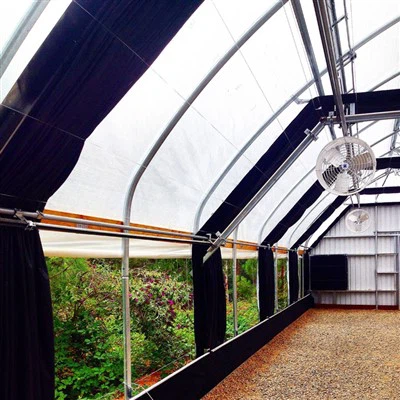
Low-end light-deprivation greenhouses typically use ordinary plastic hoop structures with an additional layer of blackout curtains covering the plastic film. These curtains can be manually or electrically rolled. This configuration is mainly suitable for small-scale growers, home growers, or gardening enthusiasts. Its main advantages are low cost, simple setup, and easy maintenance.
Mid-Range Light Deprivation Greenhouse
Mid-range light-deprivation greenhouses have significant upgrades compared to low-end ones. These upgrades include using more durable materials for the greenhouse frame and covering materials, and the blackout curtain system is located inside the greenhouse with electric control for opening and closing the curtains. Additionally, these greenhouses are equipped with necessary ventilation systems and insect nets.
Mid-Range Light Deprivation Greenhouse
High-end light-deprivation greenhouses use the most advanced greenhouse technologies available. These greenhouses usually use the most advanced materials, such as high-strength glass or multi-layer composite materials for covering, ensuring the best insulation and light transmission performance. The blackout shading system achieves full automation and automatically adjusts light intensity and duration according to plant needs and monitored environmental conditions. With high-precision environmental monitoring systems and intelligent control systems, these greenhouses can monitor temperature, humidity, CO2 concentration, and other environmental parameters in real time, providing feedback and adjusting the parameters.
Medicinal Plants
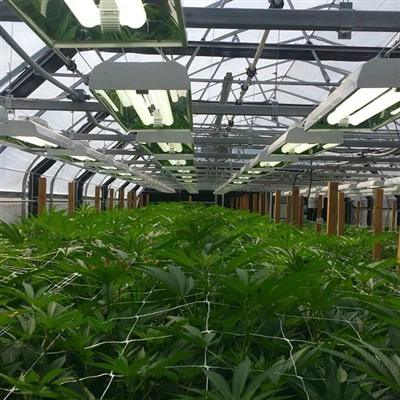
Cannabis is one of the most common medicinal plants requiring a light-deprivation greenhouse. By controlling light, its growth cycle and quality can be optimized. These greenhouses can currently harvest 3-4 seasons per year.
Flowers
High-end flowers like tulips and chrysanthemums often use light deprivation greenhouses. Precise light control helps enhance the flowers' ornamental value and market price.
Vegetables
Crops such as mushrooms are also suitable for cultivation in light-deprivation greenhouses, ensuring they grow under optimal conditions.
Research Laboratories
Some research labs requiring full light shielding also need light deprivation greenhouses to precisely control experimental conditions.

Ventilation Upgrades
Ventilation is a concern in every greenhouse, but the light dep greenhouse is particularly prone to developing both heat and humidity issues. The key to preventing this is to upgrade the ventilation system while adding any covers or tarps to block out light. If the greenhouse previously relied on passive ventilation alone, it'll need a re-design to rely on active ventilation instead. Passive ventilation simply can't be covered with light traps in the same way to ensure actual darkness, making it a poor fit for the high humidity of the light dep greenhouse.
Light Traps
Light traps are special baffles installed around ventilation equipment like air movers and fans. These baffles allow air to move through freely while still interrupting beams of light that might reach your plants and interrupt their night extension. Light traps work best on active ventilation systems since there's no need for a large gap to stay open to let air flow in and out. These kinds of designs are also available for doors and other entryways so that workers going in and out won't interrupt the photoperiod. If you're not going to invest in light controls for the entryways, make sure the greenhouse doors stay locked during dark periods while it's still bright outside.
End Wall Covers
Standard light deprivation covers are primarily designed to fit over the long end of a curved or Gothic arch greenhouse. Yet the end walls in most greenhouses also need their own covers if they're covered in translucent glazing or lack a tight fit to the rest of the structure. BTL Liners can happily supply the materials to create matching end wall covers to fit any size and style of greenhouse. Don't settle for covering end walls with improvised materials like siding or sheet metal that costs far more than affordable light deprivation material.
Tarp Pulling Arms
Whether you decide to go with an automated or manual tarp control system in the end, make sure you invest in actual tarp pulling arms. Trying to move hundreds of pounds of light dep cover completely by hand is a fool's errand, even with a large crew of people. As soon as you're covering more than a hoop house that is a few feet tall, invest in pulleys and arms that lift the cover over the building, so it moves freely. This reduces wear and tear dramatically to keep the tarp intact as long as possible. Each tiny crack and tear allows light through to interrupt the deprivation process, so don't risk damaging the cover just to save money on tarp pulling arms.
Interior Curtains and Enclosures
Unless you need to block off the entire greenhouse at once, and for the same photoperiod, you'll likely want some interior curtains to divide the space up. Interior curtains made of clear materials obviously ruin the light dep effect, so make sure they're made of the same total black out material as the rest of the tarps. These curtains and enclosures will have the same basic shape as end wall covers, but they'll need more temporary attachment options since they're likely to be moved around regularly to block off different areas.
Process of Light Deprivation Greenhouse
Select the Right Greenhouse Structure
Choosing a greenhouse that is suitable for your demands is very important. As we mentioned in our previous blog <Shaping Your Success Blackout Greenhouse vs. Traditional Greenhouse for Growers>, choose a greenhouse structure that suits your needs and budget and consider factors such as size, materials, ventilation, and the ability to block out light effectively.
Plan for Light Blocking
To achieve successful light deprivation, you'll need to block out sunlight effectively. Invest in light-blocking materials such as blackout fabrics, light-deprivation tarps, or light-dep curtains. Ensure these materials are of high quality and designed specifically for light deprivation purposes. Here is a guide to teach you how to choose these materials: "How do I choose a reflective material for a blackout greenhouse". Here we go.
Prepare the Greenhouse
If you already had a greenhouse, you would just clean and prepare the greenhouse before installing the light deprivation system. Remove any debris, weeds, or unwanted vegetation that might interfere with the effectiveness of the light-blocking materials. If you don't have one, you can choose and order the light deprivation greenhouse by way of step 1. Here is our Light deprivation greenhouse catalog. You can directly learn more details about this type of greenhouse if you need.
Install Light-Blocking Materials
Follow the manufacturer's instructions to install the light-blocking materials inside the greenhouse. Cover all walls, ceiling, and any openings like doors and vents to create a light-tight environment. Pay close attention to sealing any potential light leaks to maintain strict control over light exposure.
Automate Light Deprivation
Consider using automated systems for light deprivation. This can include motorized curtain systems or light-dep mechanisms that can be programmed to open and close at specific times. Automation ensures precision in controlling the duration and intensity of light exposure.
Develop a Light Deprivation Schedule
Create a light deprivation schedule based on your crop's specific requirements. Research the optimal light exposure for your plants during different growth stages. Determine the number of hours of light your plants need and the darkness period required to trigger flowering. Adjust the light exposure according to your desired outcomes.
Monitor and Maintain Environmental Conditions
Maintain optimal environmental conditions within the greenhouse. Regularly monitor and control factors such as temperature, humidity, ventilation, and airflow. Proper environmental control contributes to healthier plants and enhances the effectiveness of light deprivation techniques.
Troubleshooting and Adjustments
Regularly inspect the greenhouse for any potential light leaks or issues with the light-dep system. Light leaks can disrupt the light deprivation process, so address them promptly. Make adjustments as necessary to ensure a consistent and controlled light environment.
Evaluate and Refine
Observe and evaluate the effects of light deprivation on your plants. Monitor growth, flowering patterns, and overall plant health. Make adjustments to your light deprivation schedule or environmental conditions as needed to optimize results.
Climate
Although a Light Deprivation Greenhouse offers protection from climate and the elements (much like your house does), a Light Deprivation Greenhouse is still affected by the weather to some extent. Is your climate particularly hot or cold, humid or dry?
If the weather tends to be hot and/or dry, you'll need a Light Deprivation Greenhouse with accessories that keep the inside cool. If you experience cold winters, you'll want a Light Deprivation Greenhouse that can not only withstand the elements (such as snow loads and high winds) but that is well-insulated and can keep the heat in.
Budget
What does your Light Deprivation Greenhouse budget look like? Is it fairly open-ended, or will it be a limiting factor? Budget is one of the easiest but most important guidelines to determine right from the start.
A lower-end budget might mean finding a smaller Light Deprivation Greenhouse or one made from less expensive materials. Sturdy glass Light Deprivation Greenhouses might seem heavy and expensive, but glass will last a lifetime and require little upkeep. Polycarbonate or polythene coverings, on the other hand, can be cheaper initially but will degrade over time and need to be replaced.
If you live in a cold climate, you'll want to make sure to look for a well-insulated Light Deprivation Greenhouse. A cheap Light Deprivation Greenhouse kit might save you money at first, but in the long run they rarely end up being worth it; they fall apart quickly and have little insulation. Keep in mind that any supplemental heating is going to cost you money in the form of your electricity bill.
Available space
Another simple yet important factor to think about is the amount of space available for a Light Deprivation Greenhouse. First, determine how much open space there is for a Light Deprivation Greenhouse. Then, ask yourself: how much space are you willing to dedicate towards a Light Deprivation Greenhouse?
If you don't have enough space in your yard or garden, maybe you have some room against the side of your house. If that's the case, a lean-to Light Deprivation Greenhouse might be perfect for you.
If you have some empty land and are willing to go big, or even if you just have a small plot available, you should definitely consider getting a freestanding Light Deprivation Greenhouse. This is especially because many people regret not going a size up when they have a chance. A Light Deprivation Greenhouse is a long-term investment, and you may realize after a few months that you want more growing space than you initially accounted for!
Gardening needs (plants you want to grow)
Believe it or not, what plants you want to grow and plan on growing in your Light Deprivation Greenhouse can drastically affect the choice you make when picking a Light Deprivation Greenhouse.
Will you use the space as: A potting shed? A seed germination area? Or a year-long growing space for tropical plants, sprouts, microgreens, or traditional garden crops?
Finding the right balance to suit your needs is important, so make note of your gardening needs as well as what kinds of plants you plan on growing in the Light Deprivation Greenhouse. A Light Deprivation Greenhouse can help you grow plants that you might not be able to grow otherwise; like citrus trees in Minnesota, for example!
Aesthetic preferences
Aesthetics is arguably the least important factor in terms of Light Deprivation Greenhouse structure, but it is undoubtedly a significant factor in the choice you'll ultimately make. How much do you care about the look of a Light Deprivation Greenhouse? What does an ideal Light Deprivation Greenhouse look like to you?
For a fashionable choice, you can get a Light Deprivation Greenhouse with beautiful glass windows that will look incredibly stunning in your home garden. If your garden aesthetics tend more towards the ‘functional’, you can consider installing a traditional Light Deprivation Greenhouse structure or even a hoop house.
Step-by-Step Guide to Building a Light Deprivation Greenhouse
Setting up the Frame and Foundation
The first step in building a light deprivation greenhouse is setting up the frame and foundation. The frame should be sturdy enough to support the weight of the greenhouse cover and any environmental control systems that you plan to install. The foundation should be level to ensure stability and prevent water from pooling.
Installing the Light Deprivation System
The next step is installing the light deprivation system. The type of blackout material you choose will depend on your budget and the level of darkness you want to achieve. Common materials used include simple plastic film or black tarp, blackout reflective tarp, and layered, reflective blackout fabric. Be sure to properly seal any seams or gaps to prevent light leaks.
Adding Ventilation and Temperature Control
Proper ventilation and temperature control are essential to maintaining a healthy growing environment in your light deprivation greenhouse. Install greenhouse heaters, evaporative coolers, automatic greenhouse vents, and other temperature control measures to maintain ideal growing conditions. Proper ventilation is essential to maintaining healthy plant growth and preventing mold and other issues.
Irrigation and Fertilization
Setting up an irrigation system and adding fertilizers to the soil or hydroponic solution is the next step in building a light deprivation greenhouse. The type of irrigation system you choose will depend on your growing medium and the size of your operation. Be sure to monitor pH levels and nutrient levels to ensure optimal growth.
Choosing the Right Strains for Light Deprivation
Choosing the right strains for light deprivation is important for achieving optimal yields in your greenhouse. Indica and hybrid strains tend to do well in light deprivation greenhouses, but be sure to choose strains that are suited to your specific growing conditions. Choose strains that respond well to light deprivation and have short life cycles.
Harvesting and Curing Cannabis Grown in a Light Deprivation Greenhouse
Harvesting and curing your cannabis plants properly is essential to maximizing quality and flavor. Harvest your cannabis plants and cure them properly to remove excess moisture and bring out the full flavor of your cannabis.
FAQ
We're professional light deprivation greenhouse manufacturers in China, specialized in providing high quality customized service. We warmly welcome you to buy discount light deprivation greenhouse from our factory. For quotation, contact us now.
greenhouse blackout, greenhouse light deprivation system, blackout system greenhouse