As a supplier specializing in greenhouse blackout solutions, I've witnessed firsthand the transformative impact of our products on plant cultivation. The question of whether greenhouse blackout helps with reducing plant stress is not just a technical query but a crucial consideration for farmers, growers, and horticulturists aiming to optimize plant health and productivity. In this blog, I'll delve into the science behind greenhouse blackout, its benefits in stress reduction, and how our offerings can be a game - changer in your growing operations.
The Science of Plant Stress
Plants, like all living organisms, experience stress. Stress in plants can be induced by various factors such as excessive light, temperature fluctuations, water scarcity, and pest infestations. When plants are under stress, their growth and development can be severely hampered. For instance, excessive light can lead to photoinhibition, where the photosynthetic machinery of the plant is damaged, reducing its ability to convert light energy into chemical energy. High temperatures can cause water loss through transpiration, leading to dehydration and wilting.
Plants have evolved various defense mechanisms to cope with stress. These include the production of stress - related hormones, such as abscisic acid, which helps the plant to conserve water, and the activation of antioxidant systems to protect against oxidative damage caused by free radicals generated under stress conditions. However, these natural defense mechanisms have their limits, and sometimes external intervention is necessary to reduce stress and promote healthy growth.
How Greenhouse Blackout Works
A [Greenhouse with Blackout System](/light - deprivation - greenhouse/greenhouse - with - blackout - system.html) is designed to control the amount of light that plants receive. By using [Greenhouse Blackout Plastic](/light - deprivation - greenhouse/greenhouse - blackout - plastic.html), growers can create a dark environment within the greenhouse for a specific period. This is particularly useful for plants that require a certain photoperiod, or light - dark cycle, for optimal growth and development.
The blackout system can be programmed to block sunlight at specific times of the day or night. For example, some plants, such as certain types of mushrooms, require a period of darkness for fruiting. By using a blackout system in a [Mushroom Greenhouse](/light - deprivation - greenhouse/mushroom - greenhouse.html), growers can mimic the natural conditions that trigger mushroom growth.
Reducing Light - Induced Stress
One of the primary ways greenhouse blackout helps reduce plant stress is by controlling light exposure. As mentioned earlier, excessive light can cause photoinhibition. By limiting the amount of light that plants receive, especially during the peak hours of sunlight, we can prevent this damage. For plants that are sensitive to high - intensity light, such as shade - loving species, a blackout system can create a more suitable growing environment.
Moreover, some plants have specific light requirements for different stages of their growth. For example, during the vegetative stage, plants may need more light for photosynthesis, but during the flowering stage, they may require a shorter photoperiod. A greenhouse blackout system allows growers to adjust the light cycle according to the plant's needs, reducing stress and promoting healthy development.
Temperature Regulation and Stress Reduction
Greenhouse blackout also plays a role in temperature regulation. During the day, sunlight can heat up the greenhouse, leading to high temperatures that can stress plants. By blocking sunlight with a blackout system, the temperature inside the greenhouse can be kept at a more stable and suitable level. This is especially important in regions with hot climates or during the summer months.
A stable temperature helps plants maintain proper metabolic functions. For example, it ensures that enzymes involved in photosynthesis and other biochemical reactions work optimally. When the temperature is too high, these enzymes can denature, leading to a breakdown in metabolic processes and increased stress on the plant.
Water Conservation and Stress Mitigation
In addition to light and temperature control, greenhouse blackout can contribute to water conservation. High temperatures and excessive light can increase transpiration rates in plants, leading to greater water loss. By reducing the temperature and light intensity through blackout, the transpiration rate can be lowered, allowing plants to conserve water.
Conserving water is not only beneficial for the plant's health but also for the grower's bottom line. With water becoming an increasingly scarce resource, any method that can reduce water usage in agriculture is highly valuable. A greenhouse blackout system can help achieve this by creating a more efficient growing environment.
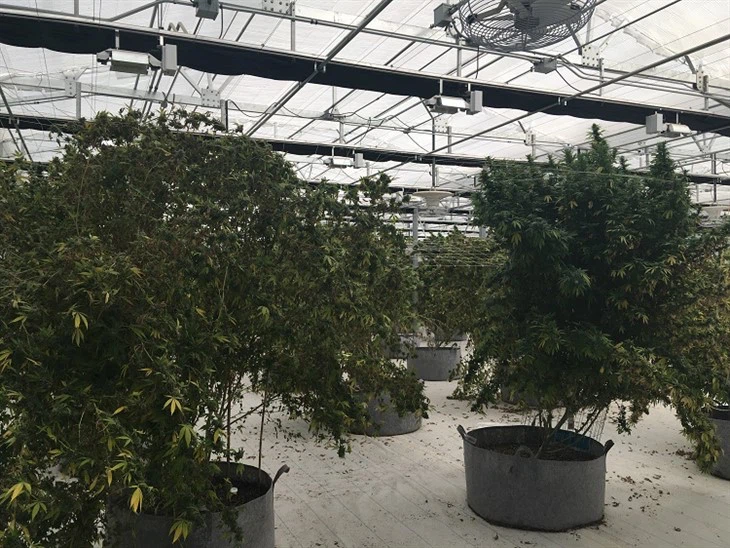

Case Studies: Real - World Results
To illustrate the effectiveness of greenhouse blackout in reducing plant stress, let's look at some real - world examples. In a commercial tomato farm, the use of a greenhouse blackout system led to a significant reduction in heat stress during the summer months. By blocking sunlight for a few hours during the hottest part of the day, the temperature inside the greenhouse was kept within a suitable range for tomato growth. As a result, the tomatoes showed improved fruit set, better quality, and higher yields.
In a mushroom cultivation facility, implementing a blackout system in the [Mushroom Greenhouse](/light - deprivation - greenhouse/mushroom - greenhouse.html) led to more consistent and abundant fruiting. The controlled photoperiod provided by the blackout system mimicked the natural conditions required for mushroom development, reducing stress on the mycelium and promoting healthy mushroom growth.
Our Greenhouse Blackout Solutions
At our company, we offer a range of high - quality greenhouse blackout products. Our [Greenhouse with Blackout System](/light - deprivation - greenhouse/greenhouse - with - blackout - system.html) is designed with state - of the - art technology to provide precise control over light exposure. The system is easy to install and operate, and it can be customized to meet the specific needs of different plants and growing environments.
Our [Greenhouse Blackout Plastic](/light - deprivation - greenhouse/greenhouse - blackout - plastic.html) is made from durable materials that can effectively block sunlight while allowing for proper ventilation. It is available in different sizes and thicknesses to suit various greenhouse designs.
Contact Us for Procurement and Consultation
If you're interested in learning more about how our greenhouse blackout solutions can help reduce plant stress and improve your growing operations, we'd love to hear from you. Whether you're a small - scale farmer or a large - scale commercial grower, our team of experts can provide you with personalized advice and solutions. Contact us to start a conversation about how we can work together to achieve your cultivation goals.
References
- Taiz, L., & Zeiger, E. (2010). Plant Physiology. Sinauer Associates.
- Hopkins, W. G., & Hüner, N. P. A. (2009). Introduction to Plant Physiology. John Wiley & Sons.